





We would appreciate any support you could provide to expand our activities and continue pursuing our mission. Your donation will help our students participating in our research, our outreach activities, as well as timely publications and dissemination of our research findings. We sincerely thank any support you could provide to our center.
The Oligarchs’ Grip: Wealth, Power, and the Future of Democracy
As oligarchic influence reshapes political and economic systems worldwide, scholars and practitioners gathered at George Mason University’s Schar School of Policy and Government on October 28 for “The Oligarchs’ Grip: Wealth, Power, and the Future of Democracy,” a conversation examining how concentrated wealth influences markets and democratic institutions alike.
Moderated by Janine R. Wedel, Distinguished University Professor at Mason and a leading expert on corruption and informal governance, the panel featured David Lingelbach of the University of Baltimore; Valentina Rodríguez Guerra of the Center for the Study of Oligarchs; Karen Greenaway, former FBI supervisory special agent; and Irena Lasota, prominent journalist and long-time advocate for democratic movements across Eastern Europe and the former Soviet Union. Together, the panelists bring experience spanning entrepreneurship and emerging markets, transnational organized crime investigations, and decades of democratic engagement in post-communist societies. Their recent work—including The Oligarchs’ Grip: Fusing Wealth and Power—has shaped contemporary debate on how global elites fuse wealth and influence across borders.
The conversation explored how today’s transnational oligarchs amass power through informal networks, evade oversight, and challenge democratic resilience, as well as strategies for promoting accountability, including transparency measures, civic participation, and independent investigation. The Q&A was initiated by Schar School Professor and former U.S. Ambassador Richard Kauzlarich, who invited discussion of how oligarchic systems vary across regions and what mechanisms remain for defending accountability. The event was organized by the Schar School’s Corruption, Networks, and Transnational Crime (CONTRA) research hub. The full discussion is available to watch online.
Americas in the Crosshairs
The Michael V. Hayden Center for Intelligence, Policy, and International Security invites you to join us as we examine the current tensions between the United States and Latin America. Illegal immigration and large-scale deportations, illicit drug smuggling, lethal US military attacks on alleged drug smuggling boats, the greatest US military buildup in the region in decades, and ramped-up friction with the Maduro regime in Venezuela and the Petro government in Colombia dominate our headlines.
Michael Morell, former acting Director of the Central Intelligence Agency, has invited three regional experts to unravel why this is happening and what comes next:
Guadalupe Correa-Cabrera: Professor, and co-director of the Terrorism, Transnational Crime, and Corruption Center, at the Schar School of Policy and Government, George Mason University.
David Fitzgerald: former senior operations officer at the Central Intelligence Agency.
Scott Hembrough: former senior analyst at the Central Intelligence Agency.
The Hayden Center is located at George Mason University's Schar School of Policy and Government in Arlington, VA. General Hayden, our founder and former Director of both the CIA and the National Security Agency, has been a distinguished visiting professor at Schar School for 16 years.
Recent Articles
“U.S.-México Border Security Risks Today: A 'New Generation' of Criminal Networks”
The War on Narcoterrorism: Is the War on Drugs Becoming the War on Terror?
The Dangerous Narrative of the “War on Cartels”
Cartels Are Not ‘Foreign Terrorist Organizations,’ but Terror in Mexico Is Real
Poverty Fuels Kidney Trafficking in Bangladesh
What's Your StORy? Naoru Koizumi
Organ harvesting fears surge in Cambodia as 80 Koreans remain missing
Counterterrorism at Crossroads: Schar School Summit Explores Evolving Threats
When Civilizational Models Collide
From Cartels to Cyberattacks: George Mason Hosts High-Level Terrorism Strategy Forum
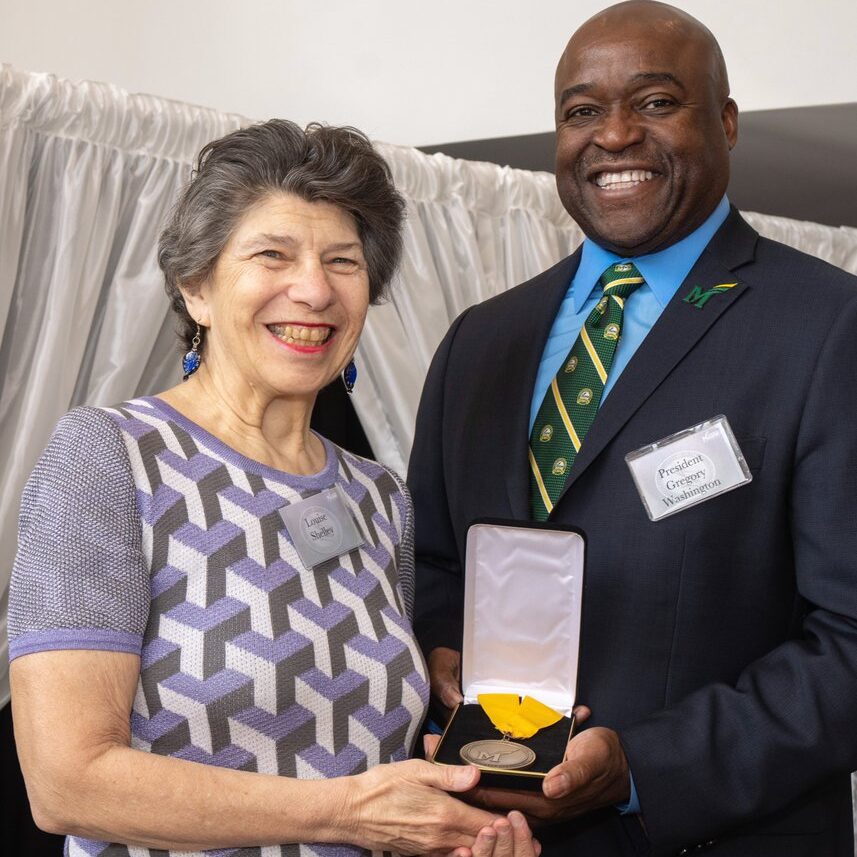
TraCCC Founder, Dr. Louise Shelley, was awarded with the Earle C. Williams Presidential Medal for Faculty Excellence in Social Impact for her body of work and its social impacts.
TraCCC produces numerous publications on topics related to the center’s areas of research, including money laundering, drug trafficking, and corruption.
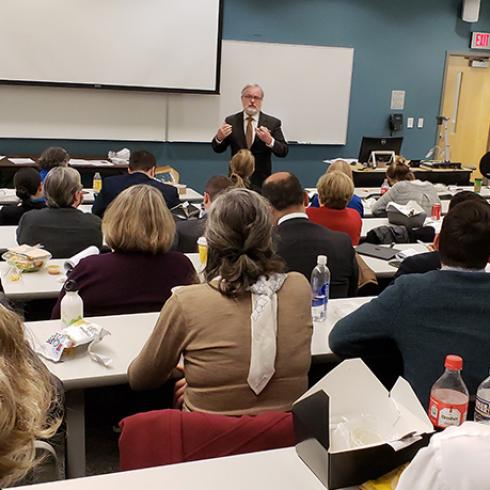
As a student of TraCCC, you will study with and learn from world-class scholars who are committed to quality teaching.

TraCCC produces numerous publications on topics related to the center’s areas of research, including money laundering, drug trafficking, and corruption.
PROJECTS
This project seeks to assess key safe haven hubs of global illicit trade, examining their impact, sectors affected, COVID-19-related threats, facilitating factors, policy responses, convergence of illicit trade types, involvement of legitimate economy actors, and the role of corruption, aiming to inform efforts to disrupt illegal networks and illicit markets globally.
The Global Terrorism Trends and Analysis Center (GTTAC) is a collaborative project led by Development Services Group (DSG) involving TraCCC staff and students using AI to identify open-source reporting on global terrorist incidents and provide data and analysis for the U.S. State Department's Annual Country Reports on Global Terrorism, with a diverse team including native speakers of various languages and contributors from different departments at George Mason University.